Camelo: The Handwritten Font That Feels Like a Warm Welcome
There’s a certain magic in a handwritten note. It carries personality, warmth, and a human touch that typed text often lacks. In the digital world, where crisp, clean fonts dominate, finding a typeface that captures that authentic, personal feel can transform a design from good to genuinely memorable. That’s the space Camelo occupies beautifully. It’s not just a script font; it’s a tool for adding a layer of approachable elegance to your creative work.
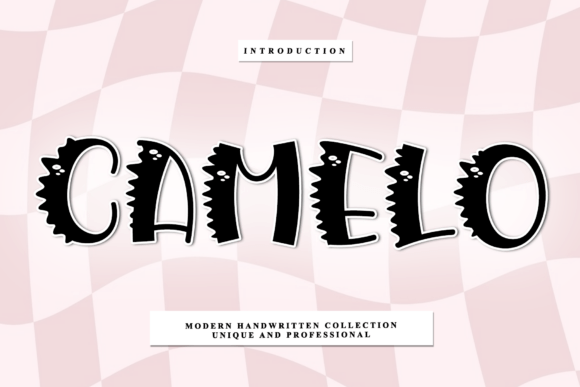
At its core, Camelo is a lovely and timeless handwritten font. Its letters flow with a natural, slightly irregular rhythm that mimics the movement of a pen on paper. The strokes have a consistent weight, avoiding the stark contrast of a serif font while steering clear of the sometimes sterile uniformity of a sans serif font. This balance gives it a versatile personality—it’s friendly without being childish, sophisticated without being stuffy. Every letter has a unique and beautiful touch, which means when you use it, your design doesn’t just display words; it tells a story with character.
Where Camelo Truly Shines: Beyond the Logo
While Camelo is an excellent choice for creating eye-catching logos, its utility extends far beyond a single application. Its strength lies in projects where connection and authenticity are key. Think of a boutique bakery’s menu, a wedding invitation suite, or the packaging for a handmade skincare line. In these contexts, Camelo acts as a creative font that instantly communicates care and artisanal quality. It’s a premium font that works hard for brands built on personality.
For brand identity, using Camelo for headings or key phrases in your marketing materials can create a consistent, recognizable voice. On social media graphics, a quote set in Camelo can stop the scroll because it feels personal and shareable. In editorial design, like a magazine feature or a blog header, it can add a touch of elegance. For packaging design, it helps products feel curated and special. Even in web design, used sparingly for pull quotes or call-to-action buttons, it can guide the user’s eye with a gentle, inviting nudge.
Making it Work: Practical Guidance for Designers and Creators
Choosing any display font is a strategic decision. With Camelo, the first step is to evaluate its fit for your project’s tone. Is your audience looking for warmth, creativity, and a personal connection? If so, it’s likely a strong candidate. If your project demands ultra-modern, geometric precision, a different typeface might be more appropriate.
Next, consider font pairing. Camelo, as a handwritten font, often pairs best with a clean, neutral companion. A simple sans serif font for body text provides excellent contrast and ensures overall readability. Avoid pairing it with another highly decorative script, as this can create visual clutter. Test your pairings in context—see how a headline in Camelo looks next to a paragraph in your chosen body font.
Always review the included styles and glyphs. Many premium fonts like Camelo come with alternates, ligatures, and multilingual support. Exploring these can add even more authenticity to your designs, allowing you to customize the look to avoid repetition. Most importantly, consider readability. Camelo is designed for impact at larger sizes. Use it for headings, logos, and short bursts of text. For longer paragraphs or small print, stick to a more legible font for body copy.
Finally, respect the licensing. If you’re using Camelo for commercial work—a client’s logo, product packaging, or monetized content—ensure you have the correct commercial font license. This supports the font designers and protects your project legally. Treating font selection as a deliberate part of your design process, rather than an afterthought, elevates the professionalism and coherence of your work.
In the end, Camelo is more than just a set of letters. It’s a design asset that helps bridge the gap between digital precision and human warmth. By understanding its personality and applying it thoughtfully, you can create visuals that don’t just capture attention but also build genuine connection.